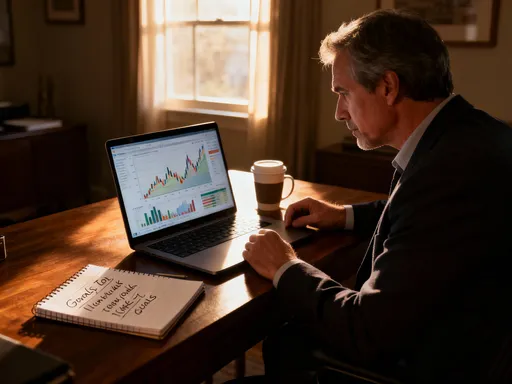
How Remote Work Quietly Hijacks Your Investment Rhythm
You finally trade commutes for coffee in pajamas, but something’s off—your savings stall, impulses spike, and investments feel stuck. I’ve been there. Remote work doesn’t just blur work-life lines; it silently warps your financial habits. The investment cycle? Easily derailed. Why does working from home make sound money moves so hard? Let’s unpack the hidden traps and how to reclaim control—without burning out.
The New Normal: When Flexibility Fuels Financial Drift
Remote work is often celebrated as the ultimate lifestyle upgrade—no rush-hour traffic, no rigid office hours, and the freedom to design your day. But beneath the surface comfort lies a subtle financial risk: the erosion of routine. When the boundaries between work, rest, and leisure dissolve, so do the habits that support long-term wealth building. Many remote workers assume that flexibility equals financial ease, only to discover months later that their savings rate has dipped and impulsive spending has quietly risen. The problem isn’t the remote setup itself—it’s the absence of structure that once naturally guided financial discipline.
In a traditional office environment, daily rhythms create built-in financial cues. The commute allows time for reflection. Office interactions may spark conversations about career growth or investment ideas. Payday routines—like automatic transfers or lunchtime banking visits—become part of the weekly flow. At home, these subtle triggers vanish. There’s no physical separation between your workspace and your living space, which makes it harder to mentally switch from earning mode to managing mode. Without deliberate effort, financial planning becomes an afterthought, and investment decisions are delayed or avoided altogether.
This drift often starts small. A missed budget review. A postponed contribution to a retirement account. A few extra online purchases during a midday break. Individually, these actions seem harmless. But over time, they accumulate into a pattern of passive financial neglect. The result? A weakened investment rhythm. Contributions slow. Portfolio rebalancing stalls. Market opportunities pass by unnoticed. The freedom of remote work, ironically, can lead to a sense of financial inertia—one that’s difficult to reverse without intentional intervention.
The key to preventing this drift isn’t to abandon remote work, but to replace lost structure with intentional design. Just as you might set up an ergonomic desk or a dedicated workspace, you can build financial guardrails that support consistent decision-making. This means creating new routines that mirror the natural rhythms of office life—scheduled check-ins, automated systems, and clear boundaries between work time and personal finance time. By doing so, you protect the very benefits remote work offers: flexibility, focus, and control—without sacrificing long-term financial health.
Income Illusions: Why Stability Feels Real (Until It’s Not)
One of the most seductive aspects of remote work is the appearance of income stability. Regular paychecks arrive on time. Expenses are covered. Life feels predictable. For many, this consistency creates a false sense of long-term security—one that can dangerously influence investment decisions. The truth is, remote roles, especially in digital-first industries, are often more vulnerable to sudden shifts than traditional positions. Companies restructure, contracts end, and roles evolve rapidly in response to market demands. What feels like a permanent arrangement today can change overnight, leaving workers financially exposed if they’ve overcommitted based on current cash flow.
This illusion of stability leads to a common financial misstep: aligning investment strategies with temporary income levels. For example, someone earning a high salary in a remote tech role might feel confident investing aggressively in growth stocks or taking on a larger mortgage. But if that income stream is tied to a short-term project or a company in a volatile sector, such decisions carry hidden risk. When the unexpected happens—like a layoff or a pay cut—those investments can become liabilities rather than assets. The problem isn’t the investment choice itself, but the assumption that today’s income will persist indefinitely.
To protect against this, remote workers must adopt a mindset of income resilience. This means stress-testing financial plans against worst-case scenarios. What if your contract isn’t renewed? What if your company shifts back to hybrid models and your role is restructured? How long could you maintain your current lifestyle on 70% of your income? These aren’t pessimistic questions—they’re practical ones. Building a financial buffer, maintaining liquidity, and avoiding over-leverage are essential strategies for navigating uncertainty.
Additionally, it’s important to separate emotional confidence from financial reality. Just because your current job feels secure doesn’t mean your investment strategy should assume perpetual stability. Diversifying income sources—through side projects, passive income streams, or skill development—can provide a cushion. Equally important is aligning investment time horizons with actual job security. Short-term goals should rely on stable, accessible funds, while long-term investments can afford more risk—but only if the foundation is strong. By treating income as dynamic rather than fixed, remote workers can make smarter, more resilient financial choices.
The Investment Cycle in Slow Motion: Lost Momentum
A healthy investment cycle depends on consistency—regular contributions, periodic reviews, and timely rebalancing. In a traditional work environment, these actions often happen by default. Payday triggers automatic 401(k) deductions. Quarterly performance reviews prompt discussions about retirement goals. Even casual conversations with colleagues can reinforce financial awareness. Remote work, however, disrupts this natural momentum. Without the external rhythms of office life, the investment cycle slows to a crawl. Check-ins become infrequent. Decisions are delayed. Emotional reactions replace disciplined strategies.
One of the most significant impacts of remote work is the loss of reflective time. The commute, once seen as a burden, often served as a mental transition period—a space to think, plan, or listen to financial podcasts. At home, that time disappears. Work spills into personal hours, and the mental energy needed for financial planning is depleted. As a result, many remote workers fall into reactive mode. Instead of proactively adjusting their portfolio, they wait for market swings to force action. This leads to buying high and selling low—a classic trap that erodes long-term returns.
Isolation also plays a role. In an office, financial decisions are often influenced by social norms. Seeing coworkers contribute to retirement plans or discussing investment apps creates subtle peer pressure to do the same. At home, that social reinforcement vanishes. Without accountability, it’s easier to justify inaction. "I’ll review my portfolio next month," becomes "next quarter," then "next year." Meanwhile, inflation quietly diminishes purchasing power, and missed contribution windows reduce compounding benefits.
Rebuilding momentum requires replacing lost external cues with internal systems. This means scheduling regular investment check-ins—just as you would a team meeting. It means setting calendar alerts for rebalancing, contribution increases, or tax-advantaged account deadlines. Technology can help: many financial platforms offer automated alerts, performance summaries, and goal-tracking tools that fit seamlessly into a remote workflow. The goal isn’t to add more tasks, but to integrate financial maintenance into existing routines. By restoring rhythm, remote workers can regain control and ensure their investments continue to grow, even in a decentralized work environment.
Risk Blind Spots: Comfort Breeds Complacency
Home is a place of safety. It’s where we relax, recharge, and feel in control. But that very comfort can create dangerous blind spots in financial decision-making. When your daily environment feels stable—warm lighting, familiar routines, the hum of the coffee maker—it’s easy to assume that your financial world is equally secure. This psychological comfort distorts risk perception. Remote workers may hold volatile assets without fully understanding their exposure, or they may neglect emergency funds because "everything feels fine right now." The danger isn’t in the assets themselves, but in the lack of objective assessment.
One common manifestation of this complacency is overconcentration in a single asset class. A remote worker earning a steady income might feel confident investing heavily in stocks, especially during a bull market. Without the natural caution that office-based financial conversations might provide, there’s little to challenge that assumption. But markets shift. Sectors evolve. A portfolio that seems balanced today could be overexposed tomorrow—if no one is actively monitoring it. The absence of routine reviews means risks go unnoticed until they become problems.
Another blind spot is the assumption that job security equals financial security. Because remote work often comes with high earning potential, especially in tech or consulting fields, individuals may take on more debt or invest more aggressively than their actual risk tolerance allows. They fail to account for the possibility of sudden income disruption. This is particularly risky for freelancers or contract workers whose income, while currently strong, lacks long-term guarantees.
To counteract this complacency, remote workers need structured ways to reassess risk without inducing anxiety. One effective method is the annual financial audit—a comprehensive review of income stability, asset allocation, emergency reserves, and insurance coverage. This isn’t about constant monitoring, but about creating a disciplined checkpoint. Another strategy is to adopt a "stress test" mindset: regularly asking, "What would happen if my income dropped by 30%?" or "Could I maintain my lifestyle if the market declined 20%?" These questions foster realism without fear. Additionally, using third-party tools—like risk assessment questionnaires or automated portfolio analyzers—can provide objective insights that personal comfort might obscure. By building in these safeguards, remote workers can maintain clarity and make decisions based on facts, not feelings.
The Spending Snare: From Snacks to Subscriptions
One of the most underestimated financial drains in remote work is the rise of micro-spendings—small, frequent purchases that individually seem insignificant but collectively erode investment capital. The convenience of home creates a perfect environment for spending creep. That quick trip to the kitchen turns into a habit of buying premium coffee pods, organic snacks, and specialty groceries. Downtime between meetings becomes a reason to browse online stores. Entertainment needs shift from occasional outings to multiple streaming subscriptions. Over time, these expenses add up, quietly diverting funds that could otherwise be invested.
Consider the grocery bill. In an office setting, lunch might be a $10 cafeteria meal or a packed sandwich. At home, the same meal could involve higher-quality ingredients, imported goods, or convenience items—all at a higher cost. Multiply that by five days a week, and the difference becomes substantial. Add in the cost of home office upgrades—ergonomic chairs, noise-canceling headphones, smart lighting—and the spending pattern becomes even clearer. These purchases are often justified as "necessary for productivity," but many blur the line between need and comfort.
Subscriptions are another silent budget killer. It’s easy to sign up for a new service during a slow afternoon—fitness apps, meal kits, entertainment platforms. Many offer free trials, making the initial commitment feel risk-free. But when those trials end, auto-renewals kick in, and monthly charges accumulate. A single $15 subscription may seem trivial, but ten of them total $1,800 a year—enough to fund a significant IRA contribution. The problem is compounded by the lack of visibility; unlike a credit card receipt, recurring charges often go unnoticed until they’ve been active for months.
To combat this, remote workers need systems that increase spending awareness without adding complexity. One effective approach is category-based tracking—using budgeting apps to categorize every expense and review them weekly. Another is the "24-hour rule" for non-essential purchases: wait a day before buying anything over a set amount. This simple pause reduces impulse spending and creates space for reflection. Additionally, scheduling a monthly "subscription audit"—reviewing all recurring charges and canceling unused services—can reclaim hundreds of dollars annually. By treating micro-spendings as serious financial decisions, remote workers can redirect those funds toward long-term goals, restoring the cash flow needed to sustain a healthy investment cycle.
Rebuilding the Rhythm: Practical Fixes That Stick
Fixing the investment cycle isn’t about rigid discipline or extreme frugality—it’s about smart design. The goal is to create systems that work with, not against, the realities of remote life. Willpower fades; routines endure. By building financial habits into daily workflows, remote workers can restore momentum without burnout. The most effective strategies are simple, automated, and integrated into existing patterns—just like turning on your computer each morning or scheduling your first meeting of the day.
One powerful tool is the financial trigger—a scheduled event that prompts action. For example, every Friday at 10 a.m., you review your budget and investment accounts. This isn’t a lengthy process—just 20 minutes of focused attention. Over time, it becomes as routine as checking email. Another effective trigger is paycheck alignment: setting up automatic transfers to savings and investment accounts the day after payday. This ensures that saving happens before spending, reducing the temptation to redirect funds.
Automation is another cornerstone of sustainable financial management. Most banks and brokerage platforms allow recurring contributions to retirement accounts, taxable investment accounts, or emergency funds. By automating these transfers, you eliminate the need for constant decision-making. Even small amounts—$50 or $100 per week—add up over time, thanks to compounding. Automation also reduces emotional interference. You’re not deciding whether to invest; the system does it for you, based on pre-set rules.
Digital tools can further enhance this rhythm. Budgeting apps sync with bank accounts to track spending in real time. Investment platforms send performance updates and rebalancing alerts. Calendar integrations remind you of tax deadlines or contribution limits. The key is to choose tools that fit your lifestyle, not overwhelm it. A simple spreadsheet may work better than a complex app for some. The goal isn’t perfection—it’s consistency. When financial maintenance becomes a seamless part of your remote routine, it stops feeling like a chore and starts feeling like a natural extension of your day.
Staying Ahead: Investing with Intention, Not Impulse
Sustainable financial success in a remote world isn’t about location—it’s about intention. It’s the difference between reacting to market news and planning for long-term goals. Between spending out of boredom and investing with purpose. Between assuming stability and preparing for change. The most successful remote workers aren’t those who earn the most, but those who maintain rhythm, awareness, and consistency in their financial lives.
This means shifting from passive management to active stewardship. It means recognizing that flexibility is a gift, but one that requires structure to be fully realized. A well-designed financial system doesn’t restrict freedom—it protects it. By setting clear goals, automating contributions, and scheduling regular reviews, remote workers can ensure their investments continue to grow, even without the external cues of office life.
It also means embracing adaptability. Markets change. Careers evolve. Personal circumstances shift. A strategy that works today may need adjustment tomorrow. The ability to reassess, rebalance, and realign is what separates long-term success from short-term luck. This isn’t about constant vigilance, but about periodic intentionality—taking time to reflect, recalibrate, and move forward with clarity.
In the end, financial health is not measured by a single number, but by the strength of the habits behind it. Remote work has changed the way we live and earn, but it doesn’t have to change the way we build wealth. With the right systems in place, you can enjoy the freedom of working from home while staying firmly on track toward your financial goals. The rhythm is still yours to control—you just have to design it with care.